Introduction
When hearing starts to change, it’s easy to focus on the obvious signs – turning up the TV, asking people to repeat themselves, or struggling in conversations.
But what many families don’t realize is this:
Hearing loss can affect far more than just your ability to hear.
It can affect communication, confidence and relationships, and research suggests it may also be connected to changes in cognitive health over time.
In this article, we’ll look at what research actually says, what families often notice first, and what steps you can take early to support both hearing and overall well-being.
Is Hearing Loss Linked to Cognitive Decline?
There is growing research showing a connection between hearing loss and cognitive health.
Hearing loss is considered a potentially modifiable risk factor for dementia
(Source: The Lancet Commission on Dementia Prevention, 2020)
Research also suggests that the risk of cognitive decline may increase as hearing loss worsens
(Source: National Institute on Aging)
However, it’s important to clarify:
- Hearing loss does not directly cause dementia in every case
- It is associated with an increased risk, not guaranteed outcomes
This is why early awareness matters.
Why Hearing Loss Affects the Brain
Hearing isn’t just about your ears – it’s a brain function.
When hearing declines, several things can happen:
- Increased Listening Effort
When sound is unclear, the brain has to work harder to fill in missing information.
- This increased effort can reduce the mental resources available for memory and thinking
- Over time, it may contribute to mental fatigue
(Source: National Institute on Aging)
- Reduced Auditory Stimulation
When the brain receives less sound input:
- Areas involved in hearing may become less active
- Long-term reduced stimulation may affect how the brain processes sound
(Source: National Institute on Aging)
- Social Withdrawal
Hearing difficulties often make communication more challenging.
- Conversations can feel exhausting
- Group settings may become overwhelming
- People may begin to withdraw socially
Social isolation itself is a known risk factor associated with cognitive decline
(Source: World Health Organization)
Early Signs Families Often Notice First
In many cases, families notice changes before the individual does.
You might observe:
- Avoiding conversations or social situations
- Becoming quieter or less engaged
- Nodding or agreeing without fully understanding
- Increased frustration or withdrawal
- Turning the TV volume up more than usual
These changes are often mistaken for aging or memory concerns – but hearing may be playing a significant role.
Why Early Action Matters
One of the biggest challenges with hearing loss is delay.
Many people wait years before seeking help.
During that time:
- Communication becomes more difficult
- Relationships may be affected
- The brain continues adapting to reduced sound input
Hearing loss is considered a potentially modifiable risk factor for dementia, which is one reason identifying and addressing hearing difficulties is important
(Source: The Lancet Commission, 2020)
What Families Can Do Next
If you’re noticing signs of hearing difficulty, here are some practical next steps:
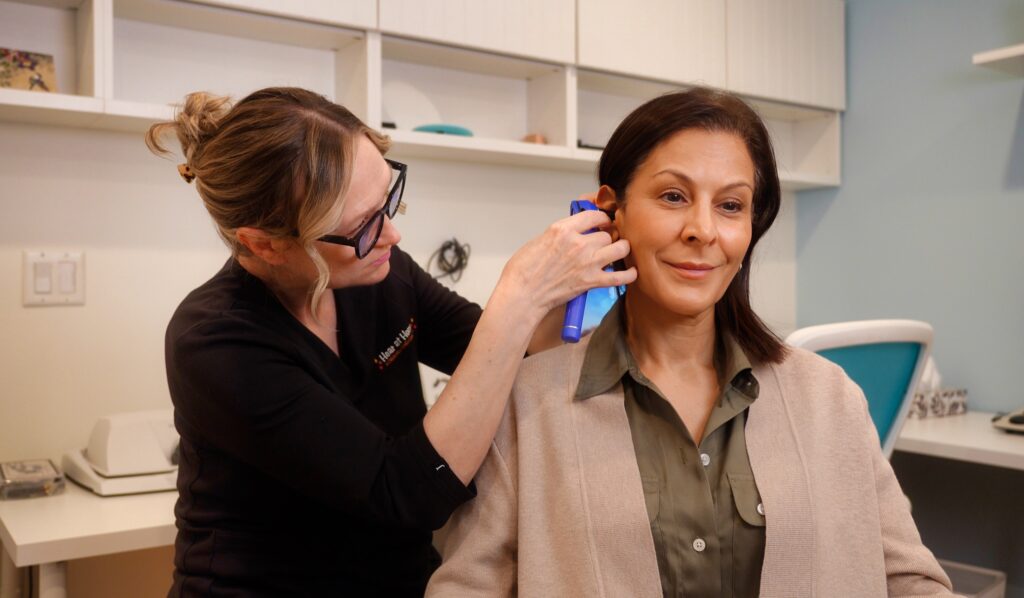
Start with a hearing assessment
This helps determine:
- The type and degree of hearing loss
- Whether both ears are affected
- If further medical evaluation is needed
Pay attention to daily communication
Ask:
- Are conversations becoming harder?
- Is listening more tiring?
- Are misunderstandings increasing?
Don’t assume it’s just aging
Changes in hearing are common – but not something to ignore.
Involve the family
Hearing loss affects everyone involved in communication. Support and awareness make a meaningful difference.
Common Misconception: “It’s Just About Volume”
Many people assume hearing loss simply means sounds need to be louder.
In reality:
- Hearing loss often affects clarity, not just volume
- Understanding speech (especially in background noise) is often the biggest challenge
That’s why simply turning things up doesn’t always solve the problem.
Frequently Asked Questions
Does hearing loss cause dementia?
No – but it is associated with an increased risk of cognitive decline.
Can hearing aids prevent dementia?
Hearing aids can support communication and reduce listening effort, but they are not currently considered a treatment or guaranteed prevention for dementia.
Is it too early to check hearing?
If you’re noticing changes, it’s a good time to have your hearing assessed.
What if someone refuses help?
Start with conversation, not pressure. Awareness often takes time.
Final Thoughts
Hearing loss is often gradual – and easy to overlook.
But its impact goes far beyond hearing.
It affects how people connect, communicate, and engage with the world around them.
The earlier it’s addressed, the easier it is to manage.
Need Support?
At Hear at Home Mobile Hearing Clinic, we support individuals and families across North Vancouver and the Lower Mainland with:
- Hearing assessments
- In-clinic and in-home care
- Ongoing support and follow-up
If you’re unsure whether hearing may be affecting you or a loved one, we’re always happy to help you understand your options.