(And When You Shouldn’t Be Doing It Yourself)
Earwax is one of the most misunderstood parts of hearing health.
Most people think it’s something that needs to be removed regularly.
In reality, that’s not usually the case.
Your ears are designed to clean themselves.
What earwax actually does
Earwax (cerumen) plays an important role in keeping your ears healthy.
It:
- Traps dust and debris
- Helps prevent infection
- Keeps the ear canal lubricated
In most cases, wax naturally moves out of the ear on its own.
You don’t need to do anything.
When earwax becomes a problem
Sometimes, wax can build up instead of clearing naturally.
This can lead to:
- A blocked or full feeling in the ear
- Reduced hearing
- Whistling hearing aids
- Discomfort or irritation
This is when earwax removal may be necessary.
What not to do
This is where many people run into trouble.
Trying to remove earwax yourself can actually make things worse.
Avoid:
- Cotton swabs (Q-tips)
- Hairpins or small objects
- At-home scraping tools
- “Camera” ear cleaning devices
These often:
- Push wax deeper into the ear
- Cause irritation or injury
- Increase the risk of infection
- In some cases, damage the eardrum
Even though they’re widely used, they’re one of the most common causes of impacted wax.
Are at-home earwax removal kits safe?
Some over-the-counter drops can help soften wax.
But tools that involve inserting anything into the ear come with risk.
And if:
- The wax is impacted
- You wear hearing aids
- You’ve had ear issues in the past
It’s best not to attempt removal yourself.
When professional earwax removal is the better option
You should consider professional removal if:
- Your hearing feels blocked
- Your hearing aids aren’t working properly
- You’ve had recurring wax buildup
- You’re unsure what’s causing the issue
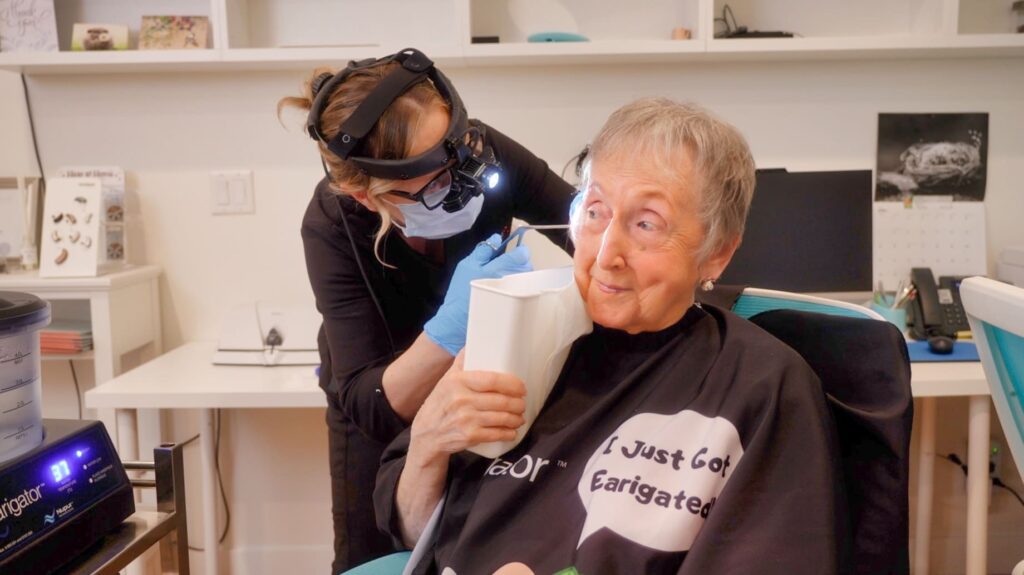
Safe removal should always be done under direct visualization using proper equipment.
Why this matters for hearing aid users
Wax buildup is one of the most common reasons hearing aids stop working properly.
It can:
- Block sound
- Cause feedback (whistling)
- Damage receivers or filters
👉 If you’re experiencing this, you may also want to read:
https://hearathome.ca/2022/02/20/why-are-my-hearing-aids-whistling-and-how-can-i-stop-it/
Where Hear at Home can help
At Hear at Home, earwax removal is part of how we support long-term hearing health.
We regularly help:
- Clients who suddenly notice reduced hearing
- Hearing aid users experiencing feedback or poor sound
- Seniors in retirement and long-term care
Our approach is:
- Safe and clinically guided
- Thorough and unhurried
- Focused on long-term outcomes, not quick fixes
👉 Learn more about our earwax removal services:
https://hearathome.ca/ear-wax-removal/
👉 Or book a full hearing assessment if you’re unsure what’s causing the issue:
https://hearathome.ca/hearing-tests/
Final thoughts
Earwax isn’t something you need to manage on a regular basis.
But when it does become a problem, how it’s handled matters.
Trying to fix it yourself can sometimes make things worse.
Getting the right support early can make it simple.